CDMO Market Analysis 2026: Size, Trends & Key Players
A comprehensive analysis of the Contract Development and Manufacturing Organization (CDMO) landscape — market sizing, competitive dynamics, segment breakdown, geographic rebalancing driven by the BIOSECURE Act, and a framework for selecting the right manufacturing partner.
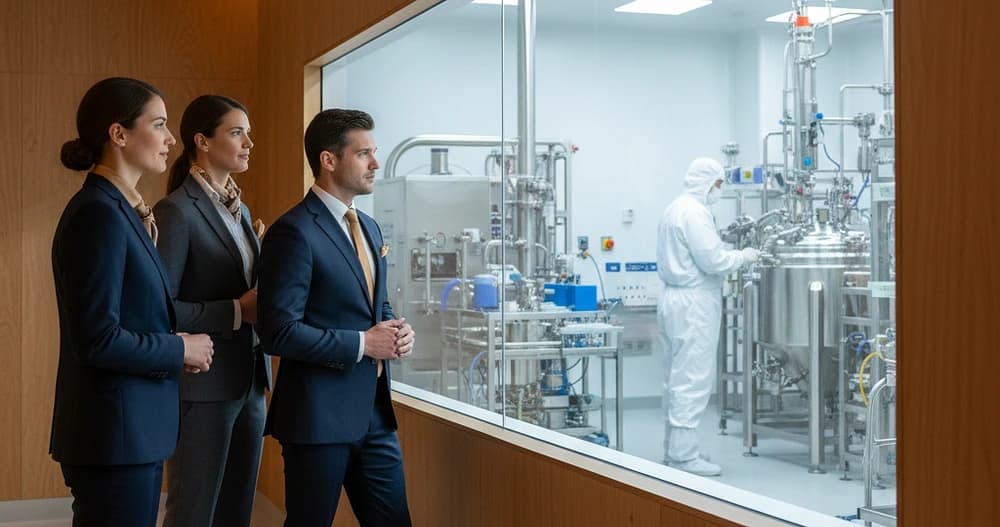
The global CDMO industry has evolved from a cost-reduction outsourcing play into a critical strategic capability for the pharmaceutical and biotechnology industry. As drug development shifts toward increasingly complex modalities — antibody-drug conjugates, cell and gene therapies, bispecific antibodies, mRNA therapeutics — the manufacturing expertise required has outpaced what most biopharma companies can build internally. The result is a CDMO market that now exceeds $200 billion in annual revenue and is growing at nearly 10% per year.
Simultaneously, the CDMO landscape is being reshaped by geopolitical forces that would have been unimaginable a decade ago. The BIOSECURE Act — signed into US law in late 2024 — is triggering the most significant geographic rebalancing of pharmaceutical manufacturing capacity since globalization opened China as a low-cost manufacturing hub in the 2000s. Companies that relied on WuXi AppTec, WuXi Biologics, and other Chinese CDMOs for decades are now racing to secure alternative capacity in the US, Europe, South Korea, and India.
This analysis provides a detailed examination of the CDMO market: its size and growth trajectory, the competitive landscape of key players, segment-level dynamics across biologics, small molecule, and cell & gene therapy manufacturing, the geographic rebalancing driven by regulatory and geopolitical forces, and a practical framework for selecting a CDMO partner. For a deeper analysis of the BIOSECURE Act's regulatory mechanics, see our dedicated article on the BIOSECURE Act's impact on pharma.
Market Size & Growth Trajectory
The global CDMO market reached approximately $210 billion in 2025, up from $170 billion in 2022. Growth has been driven by three structural forces: increasing outsourcing penetration (now ~40% of total pharmaceutical manufacturing, up from ~30% in 2018), the rising complexity of novel modalities that require specialized manufacturing expertise, and the expansion of the biologics pipeline (which accounts for ~45% of all drugs in clinical development).
| Market Metric | 2022 | 2025E | 2028E | 2030E |
|---|---|---|---|---|
| Global CDMO Market ($B) | $170 | $210 | $275 | $330 |
| Biologics CDMO ($B) | $55 | $80 | $115 | $150 |
| Small Molecule CDMO ($B) | $90 | $100 | $115 | $125 |
| Cell & Gene Therapy CDMO ($B) | $8 | $15 | $25 | $35 |
| Other (mRNA, oligos, etc.) ($B) | $17 | $15 | $20 | $20 |
| Outsourcing Penetration Rate | ~33% | ~40% | ~45% | ~48% |
The biologics CDMO segment is growing at approximately 12-15% annually — nearly double the overall market growth rate — driven by the expansion of monoclonal antibody manufacturing, the emergence of ADC and bispecific antibody programs, and the buildout of cell and gene therapy manufacturing capacity. Small molecule CDMO growth has moderated to 3-5% but remains a $100B+ market with stable demand driven by generics, complex APIs, and controlled-substance manufacturing.
Key Growth Drivers
Biologics Pipeline Expansion
~4,500 biologics in clinical development globally. Each program needs process development, cell line development, clinical manufacturing, and eventually commercial supply. This translates to sustained demand for CDMO services across the development lifecycle.
Manufacturing Complexity
Novel modalities (ADCs, bispecific antibodies, cell therapies, mRNA) require specialized equipment, clean rooms, and process expertise that most biotechs cannot build internally. Even large pharma companies outsource 30-50% of novel modality manufacturing.
Capital Efficiency Pressure
Building a cGMP manufacturing facility costs $200M-$1B+ and takes 3-5 years. For clinical-stage biotechs, outsourcing to a CDMO is the only viable path. Even for commercial-stage companies, the capital efficiency of outsourcing vs. owning capacity favors CDMOs for all but the highest-volume products.
Regulatory & Geopolitical Shifts
The BIOSECURE Act and broader supply chain resilience concerns are driving companies to diversify manufacturing across multiple geographies. This "dual-sourcing" trend effectively doubles CDMO demand for companies that previously relied on a single supplier.
Key Players: The CDMO Competitive Landscape
The CDMO market is fragmented — with over 500 providers globally — but the top 20 companies account for approximately 55% of total revenue. The competitive landscape is rapidly consolidating through M&A (Novo Holdings' $16.5B acquisition of Catalent, Thermo Fisher's $20.4B acquisition of PPD, Lonza's organic capacity expansion), and the strategic dynamics differ significantly across the biologics, small molecule, and cell & gene therapy segments.
Biologics CDMOs
| Company | HQ | Revenue (est.) | Key Capabilities | BIOSECURE Status |
|---|---|---|---|---|
| Lonza | Switzerland | $7.5B | mAbs, ADCs, cell & gene therapy, mRNA | Unaffected — major beneficiary |
| Samsung Biologics | South Korea | $3.2B | mAbs, bispecifics, large-scale (620kL capacity) | Unaffected — major beneficiary |
| Catalent (Novo) | US | $4.2B | Biologics, gene therapy, oral delivery, analytical | Unaffected |
| WuXi Biologics | China | $2.8B | mAbs, bispecifics, ADCs, 280kL+ capacity | Named in Act — clients migrating |
| Fujifilm Diosynth | Japan | $2.0B | mAbs, gene therapy, vaccines, single-use | Unaffected — investing heavily in US/EU |
| Boehringer Ingelheim | Germany | $1.8B | mAbs, cell therapy, microbial expression | Unaffected |
| AGC Biologics | Japan | $1.2B | mAbs, plasmid DNA, cell therapy | Unaffected |
Small Molecule CDMOs
The small molecule CDMO market remains the largest segment by revenue, anchored by generic API manufacturing, complex intermediates, and controlled-substance production. Key players include:
| Company | HQ | Revenue (est.) | Key Strengths |
|---|---|---|---|
| WuXi AppTec (WuXi STA) | China | $4.1B | Full CRO+CDMO integration, cost-competitive, vast chemistry capacity |
| Thermo Fisher (Patheon) | US | $3.5B | End-to-end services, sterile fill-finish, complex formulations |
| Recipharm | Sweden | $1.5B | Oral solid dose, inhalation, complex APIs |
| Siegfried | Switzerland | $1.3B | Complex APIs, controlled substances, high-potency |
| Piramal Pharma Solutions | India | $0.8B | Cost-competitive, complex APIs, peptide manufacturing |
| Curia (AMRI) | US | $0.7B | Small molecule API, drug product, analytical services |
Cell & Gene Therapy CDMOs
Cell and gene therapy manufacturing is the fastest-growing CDMO segment and arguably the most strategically important. The manufacturing complexity of viral vectors (AAV, lentiviral), CAR-T cells, and in vivo gene therapies creates substantial barriers to entry and gives established CDMOs significant pricing power.
Key players in this segment include:
- Lonza: The market leader in viral vector manufacturing with dedicated facilities in Houston and Visp (Switzerland). Expanded capacity by 50% in 2024-2025 to meet demand.
- Catalent (Novo Holdings): Strong position in gene therapy viral vector manufacturing. The Novo Holdings acquisition provides capital for continued expansion.
- Fujifilm Diosynth: Invested $2B in a new gene therapy facility in North Carolina, positioning for the BIOSECURE-driven demand shift.
- Oxford Biomedica: UK-based specialist in lentiviral vector manufacturing, with the AstraZeneca COVID vaccine contract as a proof point of scale capability.
- Thermo Fisher (Brammer Bio): Growing viral vector capacity with facilities in Cambridge (MA) and Lexington (KY).
The cell & gene therapy CDMO segment is projected to grow from $15B in 2025 to $35B by 2030 — a 18-20% CAGR — driven by the expansion of approved cell therapies (CAR-T, TCR-T), the emergence of in vivo gene editing programs, and the growing number of clinical-stage programs requiring GMP viral vector supply.
Geographic Trends: The Great Rebalancing
The CDMO market is undergoing a historic geographic rebalancing driven by three converging forces: the BIOSECURE Act, broader supply chain resilience concerns (accelerated by COVID-19 disruptions), and geopolitical tensions between the US/EU and China. This rebalancing is creating both disruption and opportunity across every major manufacturing region.
China: From Growth Engine to Strategic Risk
China's CDMO industry grew from virtually zero in 2010 to approximately $20B+ in annual revenue by 2025, fueled by lower labor costs, government subsidies, a massive chemistry workforce, and aggressive capacity investment by WuXi AppTec, WuXi Biologics, Asymchem, and others. At peak, Chinese CDMOs served over 1,500 Western biopharma clients.
The BIOSECURE Act has fundamentally altered the trajectory. Key dynamics:
- Client migration: Companies with US government exposure (NIH-funded, VA/Medicare products, BARDA contracts) are actively transitioning manufacturing to non-Chinese CDMOs. Technology transfer timelines of 12-24 months mean companies must begin the process now to meet 2029-2032 compliance deadlines.
- Pricing impact:As demand shifts from Chinese to Western CDMOs, pricing power is shifting. Western CDMO prices have increased 10-15% since the Act's passage, while Chinese CDMOs are offering discounts of 20-30% to retain clients — creating a complex cost-benefit calculus for companies not directly affected by the legislation.
- Capacity implications: Chinese CDMOs have invested billions in capacity that may become underutilized for Western clients. WuXi Biologics is pivoting toward domestic Chinese demand and non-US international markets (EU, Japan, emerging markets), while WuXi AppTec is exploring structural separation of its US-facing business. For a broader perspective on the evolving China biopharma landscape and its deal-making implications, see our China biotech licensing opportunities guide.
South Korea, Japan & India: The Alternative Asia
The BIOSECURE-driven demand shift is a massive tailwind for non-Chinese Asian CDMOs:
- South Korea:Samsung Biologics is the primary beneficiary, having expanded to 620,000L of bioreactor capacity — the world's largest single-site biologics CDMO. Samsung has signed $3B+ in new contracts since the BIOSECURE Act's passage, and is investing $5.6B in "Super Plant 2" with 784,000L of additional capacity. SK pharmteco is also expanding small molecule capacity.
- Japan:Fujifilm Diosynth has committed $4B+ to global capacity expansion, with major investments in the US (North Carolina) and Denmark. AGC Biologics is expanding in Japan and Seattle. The Japanese government's economic security legislation is providing subsidies for domestic CDMO capacity buildout.
- India:India's CDMO industry ($15-20B) is predominantly small molecule and generic API focused. Companies like Piramal, Syngene, and Aragen are positioning for complex molecule manufacturing, but biologics CDMO capabilities remain limited compared to Korea and Japan. India's strength is cost-competitive chemistry and large-scale generic API production.
US & Europe: Reshoring & Capacity Expansion
The US and European CDMO markets are experiencing their largest capacity expansion cycle in two decades:
- United States:The Inflation Reduction Act, CHIPS-adjacent biosecurity provisions, and state-level incentives are driving $10B+ in announced CDMO capacity investments. Fujifilm's North Carolina facility ($2B), National Resilience's multi-site expansion ($1.5B), and Catalent's capacity upgrades are representative examples. The US biologics CDMO market is projected to grow at 15% CAGR through 2030.
- Europe:Lonza continues to invest in its Swiss facilities (Visp) and a major expansion in Vacaville, California. Boehringer Ingelheim is expanding biopharmaceutical capacity in Vienna. Recipharm and Siegfried are investing in complex API manufacturing. The EU's Critical Medicines Alliance is providing policy support for domestic manufacturing self-sufficiency.
| Region | Market Share (2025) | Projected Share (2030) | Growth Driver | BIOSECURE Impact |
|---|---|---|---|---|
| North America | 35% | 38% | Reshoring, biologics expansion | Strong positive — demand shift from China |
| Europe | 30% | 28% | Complex APIs, cell/gene therapy | Moderate positive |
| China | 15% | 10% | Domestic demand growth, but Western exit | Strong negative — client migration |
| South Korea | 7% | 10% | Samsung Biologics expansion | Strong positive — largest beneficiary |
| Japan | 5% | 6% | Fujifilm, AGC expansion | Moderate positive |
| India | 5% | 5% | Generic API, cost arbitrage | Neutral — limited biologics exposure |
| Rest of World | 3% | 3% | Emerging market supply | Neutral |
How to Choose a CDMO Partner
CDMO selection is one of the most consequential supply chain decisions a biopharma company makes — and increasingly, firms are engaging strategic partnership advisors to navigate the process. A poor choice can result in manufacturing delays (6-18 months lost), batch failures that consume limited API supply, regulatory observations that delay approval, and — in the worst case — program termination due to inability to produce drug product to specification. Here is a systematic framework for CDMO evaluation.
Core Selection Criteria
Technical Capability & Modality Fit
Does the CDMO have demonstrated experience with your specific modality? A biologics CDMO is not a cell therapy CDMO. An ADC manufacturer needs conjugation chemistry and high-potency handling capabilities that most biologics CDMOs lack. Ask for specific process development case studies in your modality — not just general capabilities brochures.
Regulatory Track Record
How many successful FDA/EMA pre-approval inspections has the CDMO hosted? What was the outcome of the most recent regulatory inspection? CDMOs with clean inspection histories and experience supporting NDA/BLA filings in your target markets are significantly lower risk. Request the last 3 FDA inspection reports (483s) and the CDMO's corrective action responses.
Capacity & Scalability
Does the CDMO have available capacity for your clinical manufacturing needs today AND the ability to scale for commercial supply? Capacity crunches — especially in biologics and cell therapy — can create 12-18 month wait times. Understand the CDMO's current utilization, expansion plans, and commitment to reserving capacity for your program.
Geographic & Geopolitical Considerations
Where is the CDMO located relative to your target markets? Will manufacturing in this location create regulatory, supply chain, or BIOSECURE compliance concerns? Increasingly, companies are dual-sourcing across geographies (e.g., US + EU, or Korea + US) to mitigate geographic concentration risk.
Financial Stability & Investment
Is the CDMO financially stable enough to honor multi-year commitments? Companies backed by private equity may face cost-cutting pressure that affects quality. CDMOs with strong balance sheets or strategic owners (Samsung, Fujifilm, Novo Holdings/Catalent) provide greater assurance of sustained investment in people, facilities, and technology.
Intellectual Property Protection
How does the CDMO protect your process IP, formulation know-how, and proprietary data? What are the confidentiality provisions, and does the CDMO segregate client information physically and digitally? For companies working with Chinese CDMOs, IP protection mechanisms must be evaluated with additional rigor.
Stage-Specific CDMO Selection Considerations
| Development Stage | Priority Criteria | Common Mistakes |
|---|---|---|
| Preclinical / IND-Enabling | Speed to GMP material, process development expertise, flexibility for process changes | Choosing on cost alone; selecting a large CDMO that deprioritizes small programs |
| Phase 1-2 Clinical | Analytical capabilities, process optimization, tech transfer readiness, regulatory filing support | Not planning for scale-up; locked into a CDMO that cannot support Phase 3 volumes |
| Phase 3 / Pre-Approval | Process validation capability, regulatory inspection readiness, supply reliability, commercial scale | Changing CDMOs at this stage (creates 12-18 month delay); underestimating PAI preparation |
| Commercial | Cost competitiveness, supply chain reliability, multi-year capacity commitment, quality consistency | Single-sourcing without backup; not negotiating cost reductions for volume commitments |
Emerging Trends Reshaping the CDMO Industry
Beyond the BIOSECURE-driven geographic rebalancing, several technology and business model trends are reshaping the CDMO landscape.
Continuous Manufacturing
Traditional pharmaceutical manufacturing uses batch processes — discrete production runs with start-and-stop cycles. Continuous manufacturing runs production without interruption, offering significant advantages in efficiency (30-50% lower cost), quality (real-time quality control), and environmental footprint (smaller facilities, less waste). The FDA has actively encouraged adoption, and several CDMOs are investing in continuous manufacturing platforms.
Key developments include Thermo Fisher's continuous processing capabilities for oral solid dosage, Lonza's continuous bioprocessing pilot lines, and specialized firms like Continuus Pharmaceuticals focused exclusively on continuous flow chemistry. Adoption remains early-stage (estimated <5% of CDMO revenue in 2025) but is projected to reach 15-20% by 2030 as regulatory acceptance broadens.
AI & Digital Manufacturing
Artificial intelligence is beginning to transform CDMO operations across multiple dimensions:
- Process development: AI-powered design of experiments (DoE) can reduce process development timelines by 30-50% by predicting optimal conditions from smaller datasets. Companies like Aragen and CHEMI are implementing ML-driven process optimization.
- Predictive quality: Machine learning models that predict batch quality in real-time, enabling proactive intervention before out-of-spec conditions occur. This is particularly valuable for biologics, where batch failures can cost $500K-$5M per occurrence.
- Supply chain optimization: AI-driven demand forecasting and inventory management across multi-site CDMO networks, improving capacity utilization and reducing lead times.
- Digital twins: Virtual replicas of manufacturing processes that enable in silico process optimization, scale-up prediction, and troubleshooting without consuming physical materials or production time.
Modular & Prefabricated Facilities
Traditional pharmaceutical manufacturing facilities take 3-5 years to build and cost $500M-$1B+. Modular construction — using prefabricated, self-contained manufacturing pods that can be assembled like building blocks — reduces construction time to 12-18 months and cost by 30-40%.
Companies leading modular facility adoption include G-CON Manufacturing (modular cleanroom pods), Just Evotec Biologics (J.POD continuous bioprocessing platform), and National Resilience (modular biomanufacturing). This trend is particularly important for cell & gene therapy manufacturing, where smaller-scale, highly flexible facilities are more appropriate than traditional large-scale bioreactor farms.
Biosimilars & the Manufacturing Capacity Crunch
The biosimilar wave — driven by patent cliffs on major biologics including Humira, Keytruda (2028), Opdivo (2028), and Stelara (2025) — is creating additional demand for CDMO biologics manufacturing capacity. Biosimilar manufacturers (Biocon, Samsung Bioepis, Sandoz, Celltrion) need substantial clinical and commercial manufacturing capacity, competing with innovator biotechs for the same CDMO resources.
This competition for capacity is a key factor driving the pricing increases observed across biologics CDMOs. Companies that secure multi-year manufacturing agreements with capacity commitments are better positioned than those relying on spot capacity.
Strategic Implications for Biopharma Companies
The CDMO market dynamics described above have concrete strategic implications for pharmaceutical and biotechnology companies of all sizes:
- Lock in capacity early. With demand growing faster than supply — particularly in biologics and cell therapy — companies that secure CDMO relationships 12-18 months before they need manufacturing capacity will avoid the queue. This means initiating CDMO selection during preclinical development, not after IND approval.
- Plan for dual-sourcing. Single-source manufacturing — whether at a Chinese CDMO or a Western one — creates unacceptable supply chain risk. Companies should plan for dual-sourcing from the outset, ideally across different geographies. The incremental cost of maintaining two qualified manufacturing sites is insurance against single-point-of-failure disruptions.
- Factor CDMO into deal structuring. For companies evaluating licensing or partnership deals, the manufacturing strategy is a critical component of due diligence. Assets manufactured at BIOSECURE-affected CDMOs will require technology transfer — adding cost and timeline to the deal. This should be reflected in deal economics.
- Consider CDMO partnerships as strategic assets. Long-term CDMO relationships with established quality histories and regulatory track records are strategic assets, not commodity contracts. Companies that invest in these relationships — through multi-year commitments, dedicated suites, and co-investment in capacity — achieve better outcomes than those that treat CDMOs as interchangeable vendors.
- Monitor the BIOSECURE compliance timeline. Companies with any US government revenue exposure (Medicare, VA, NIH-funded products) must begin CDMO transition planning now. Technology transfer for biologics takes 12-24 months, and the compliance deadlines (starting 2029) leave limited margin for delay.
Frequently Asked Questions
How large is the global CDMO market?
The global CDMO market reached approximately $210 billion in 2025 and is projected to exceed $330 billion by 2030, growing at a CAGR of 8-10%. Biologics manufacturing is the fastest-growing segment at 12-15% CAGR, driven by the growth of monoclonal antibodies, ADCs, and cell & gene therapies. The market expansion is fueled by increasing outsourcing rates (now ~40% of total pharmaceutical manufacturing) and the growing complexity of novel modalities.
Who are the largest CDMOs in the world?
The top 10 CDMOs by revenue include: Lonza ($7.5B, Switzerland), Samsung Biologics ($3.2B, South Korea), Catalent ($4.2B, US — now owned by Novo Holdings), Thermo Fisher Scientific ($3.5B pharma services, US), WuXi Biologics ($2.8B, China), WuXi AppTec ($4.1B, China), Fujifilm Diosynth ($2.0B, Japan), Boehringer Ingelheim Biopharmaceuticals ($1.8B, Germany), AGC Biologics ($1.2B, Japan), and Recipharm ($1.5B, Sweden).
How will the BIOSECURE Act affect the CDMO market?
The BIOSECURE Act, signed into law in late 2024, prohibits US federal agencies from contracting with companies that use designated Chinese biotechnology companies of concern (BCCs). WuXi AppTec, WuXi Biologics, and BGI Group are the primary targets. This is driving a significant rebalancing of CDMO capacity away from China toward Western and allied-nation providers, creating capacity constraints and pricing pressure. Companies with US government exposure must transition to non-Chinese CDMOs by the compliance deadlines (2029-2032).
How should a biotech company choose a CDMO partner?
Key selection criteria include: technical capabilities aligned with your modality (biologics, small molecule, CGT), regulatory track record (successful FDA/EMA inspections), capacity availability and scalability, geographic location (considering supply chain resilience and BIOSECURE compliance), financial stability (ability to invest in capacity and technology), cultural fit and communication quality, and intellectual property protections. For clinical-stage programs, speed to IND-enabling manufacturing is often the most critical factor. For commercial programs, reliability, scale, and cost competitiveness are paramount.
Conclusion: Manufacturing as Strategy
The CDMO market is no longer a back-office procurement topic — it is a board-level strategic issue. The convergence of manufacturing complexity (novel modalities), regulatory disruption (BIOSECURE), geopolitical rebalancing (supply chain resilience), and capacity constraints (demand outpacing supply) means that companies' CDMO strategies directly affect their ability to advance programs, secure partnerships, and deliver medicines to patients.
For biopharma executives, the message is clear: invest in CDMO relationships early, plan for geographic diversification, and treat manufacturing strategy as an integral part of corporate development — not an afterthought delegated to procurement. Companies that get this right will have a genuine competitive advantage. Those that do not will face delays, cost overruns, and supply chain disruptions that erode program value and shareholder returns.
At Vision Lifesciences, with offices in Hong Kong, Shanghai, Zurich, and Chicago, we help biopharma companies navigate the CDMO landscape as part of our broader cross-border advisory services. Whether you are evaluating CDMO options as part of a licensing deal, conducting supply chain due diligence on an acquisition target, or restructuring your manufacturing strategy in response to BIOSECURE, our team brings deep industry knowledge and cross-border perspective to the decision.