San Diego Biotech: Companies, Startups and the Torrey Pines Cluster
San Diego turned a single 1978 startup into one of the leading US biotech hubs, known for genomics, RNA medicines, neuroscience and a steady stream of billion-dollar acquisitions. Here is how the cluster works, who the leading companies and investors are, and why its links with Japan and the rest of Asia matter.
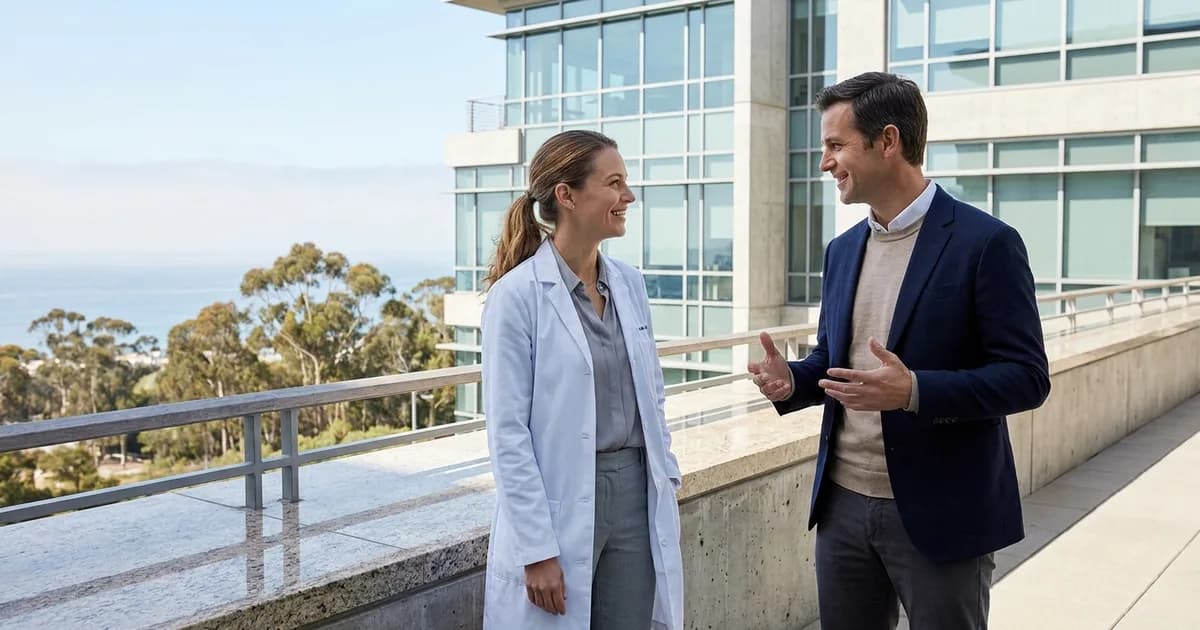
San Diego Biotech at a Glance
San Diego biotech is the cluster of biopharmaceutical, genomics and medical technology companies around the research institutes of La Jolla’s Torrey Pines Mesa and the neighboring districts of northern San Diego. It is one of the leading US hubs, smaller than Boston/Cambridge and the San Francisco Bay Area but with distinct strengths, as our guide to global biotech hubs shows.
| Measure | Figure |
|---|---|
| Rank among US biopharma clusters (GEN, 2026) | 6th |
| NIH funding | $1.36 billion |
| Biopharma venture capital (2025) | $1.9 billion |
| Lab space | 28.7 million sq ft |
| Biopharma jobs | 71,448 |
| Life-science economic output (Biocom, 2025) | $55.2 billion |
| Life-science lab vacancy (Savills, Q3 2026) | 28.5% |
The first five figures are from GEN’s 2026 ranking of the top 10 US biopharma clusters. Biocom California’s 2026 economic impact report counts 61,866 direct life-science jobs and 155,621 jobs in total supported by the industry in the region. On talent, CBRE’s 2026 ranking places San Diego eighth among US life-science markets, and its core life-science employment grew in 2025 for the first time in three years.
From Hybritech to Today
San Diego biotech began with Hybritech, founded in 1978 by UC San Diego’s Ivor Royston and Howard Birndorf to develop monoclonal antibody diagnostics and regarded as the region’s first biotech company. Eli Lilly acquired it in 1986. The sale did more than reward its founders: Hybritech alumni went on to start dozens of San Diego companies, beginning with Gen-Probe, and created the pool of experienced executives that the cluster still relies on.
A series of landmark exits followed. Warner-Lambert bought La Jolla’s Agouron Pharmaceuticals, maker of the HIV drug Viracept, for $2.1 billion in stock in 1999. IDEC Pharmaceuticals, which developed Rituxan, merged with Biogen in 2003 to form Biogen Idec. Bristol Myers Squibb acquired Amylin, the diabetes company, in 2012 for about $5.3 billion in equity value. And Illumina, founded in 1998, bought Solexa in 2007, a deal that took it into the next-generation sequencing business it now leads.
The pattern has held ever since: San Diego builds companies to the point where a larger company pays a premium for them, and the proceeds and people flow back into new startups.
Where Biotech Sits in San Diego
- Torrey Pines Mesa. The research core along North Torrey Pines Road: the Salk Institute, Scripps Research and Sanford Burnham Prebys, with companies such as Capricor and Erasca nearby.
- University City and Campus Point. Next to UC San Diego: Illumina’s headquarters, Kura Oncology and Arcturus, and Alexandria’s Campus Point, where a 427,000 sq ft research hub was delivered for Bristol Myers Squibb.
- Sorrento Mesa and Sorrento Valley. The largest concentration of lab buildings: Dexcom, Viking Therapeutics, RayzeBio, Kumquat Biosciences and the BioLabs San Diego incubator.
- Del Mar Heights and Carmel Valley. Along El Camino Real: Neurocrine, Halozyme, Acadia and Travere, and the Torrey Heights campus where Pfizer opened its oncology research center.
- Carlsbad. Further north: Ionis Pharmaceuticals and Tyra Biosciences.
The Research Institutes on the Mesa
Few places pack as many independent research institutes into a few square miles as the Torrey Pines Mesa.
- The Salk Institute, founded by polio vaccine pioneer Jonas Salk and opened in 1963, in a Louis Kahn building that is now a historic landmark.
- Scripps Research, founded in 1924, which has contributed to more than 15 FDA-approved therapies, including Humira, and whose faculty includes the Nobel laureates Barry Sharpless and Ardem Patapoutian.
- UC San Diego, whose School of Medicine received more than $425 million of NIH funding in fiscal 2025, fourth among public institutions.
- Sanford Burnham Prebys, founded in 1976 as the La Jolla Cancer Research Foundation, which took the Prebys name after a $100 million gift in 2015 and marks its 50th anniversary in 2026.
- The La Jolla Institute for Immunology, founded in 1988 and now employing more than 450 people, and the J. Craig Venter Institute, whose La Jolla headquarters sits on the UC San Diego campus.
Leading San Diego Biotech Companies
| Company | Known for | Latest figure |
|---|---|---|
| Illumina | DNA sequencing | About $4.3 billion revenue in 2025 |
| Neurocrine Biosciences | Neuroscience and endocrinology (Ingrezza, Crenessity) | $2.86 billion revenue in 2025 |
| Halozyme Therapeutics | ENHANZE subcutaneous drug delivery | $1.40 billion revenue in 2025, up 38% |
| Acadia Pharmaceuticals | Neurology and rare disease (Nuplazid, Daybue) | $1.07 billion revenue in 2025 |
| Ionis Pharmaceuticals (Carlsbad) | RNA-targeted medicines | $944 million revenue in 2025 |
| Travere Therapeutics | Rare kidney disease (Filspari) | $490.7 million revenue in 2025 |
| Kura Oncology | Menin inhibitor Komzifti for leukemia | FDA approval in November 2025 |
| Viking Therapeutics | Obesity (VK2735) | Phase 3 VANQUISH trials fully enrolled |
| Janux Therapeutics | Tumor-activated T-cell engagers | $971 million of cash, June 2026 |
Medical technology is a second pillar: Dexcom reported $4.66 billion of revenue in 2025 and ResMed $5.65 billion in its fiscal year to June 2026.
The commercial companies show San Diego’s range. Halozyme earned $868 million of royalties in 2025 from partners using its ENHANZE technology, a licensing business model in its own right. Ionis and its partners won four FDA approvals in the 14 months to October 2026, including Dawnzera for hereditary angioedema, Zanvastro for Alexander disease and GSK’s Hibsago for chronic hepatitis B, and Travere’s Filspari became the first FDA-approved drug for focal segmental glomerulosclerosis in April 2026.
More decisions are coming. San Diego’s Capricor Therapeutics expects an FDA decision on deramiocel for Duchenne muscular dystrophy by November 22, 2026, and our PDUFA calendar tracks it alongside the other FDA decisions due through May 2027.
Big Pharma Is Building
Large companies are investing in San Diego even as the startup market cools. According to Savills, Pfizer opened a 230,000 sq ft oncology research center at Torrey Heights in 2026 for about 650 employees, Alexandria delivered a 427,000 sq ft research hub for Bristol Myers Squibb at Campus Point, and Novartis began building a 466,000 sq ft biomedical research center due for completion in 2029.
Many more pharma companies own San Diego operations through acquisitions: Johnson & Johnson (Ambrx), Merck (Prometheus and Cidara), Eli Lilly (Ventyx), Lundbeck (Longboard), Novartis (Avidity and Regulus), Vertex (Crinetics) and Bristol Myers Squibb (Turning Point, Mirati and RayzeBio). For local biotechs, that means potential partners and acquirers have research teams in the same few square miles.
Acquisitions also create new companies: as part of Novartis’s purchase of Avidity, Avidity’s cardiology programs were spun out into a new company, Atrium Therapeutics.
Lab Space and Real Estate
San Diego’s lab market is adjusting after a construction boom. Savills put overall life-science vacancy at 28.5% in the third quarter of 2026, made up of 25.8% direct and 2.8% sublease vacancy, against 27.9% a year earlier. Cushman & Wakefield, which defines the market slightly differently from GEN, counts about 26.6 million sq ft of inventory, with average asking rents of $67.09 per sq ft and about 1.3 million sq ft under construction, roughly 70% of it pre-leased.
Capital is still flowing to the best campuses. The 520,000 sq ft Torrey Heights campus in Del Mar Heights, where Pfizer leased 230,000 sq ft, was refinanced with a $465 million loan, and Pacific Center, a 525,000 sq ft campus in Sorrento Mesa, secured $290 million of refinancing and signed its first tenant. For companies, the result is more choice and better terms than at any point since 2021.
Recent Acquisitions of San Diego Biotechs
| Closed | Deal | Value |
|---|---|---|
| 2022 | Bristol Myers Squibb acquires Turning Point Therapeutics | $4.1 billion |
| 2023 | Merck acquires Prometheus Biosciences | About $10.8 billion |
| 2024 | Bristol Myers Squibb acquires Mirati Therapeutics | $4.8 billion plus a CVR of about $1 billion |
| 2024 | Bristol Myers Squibb acquires RayzeBio | About $4.1 billion |
| 2024 | Lundbeck acquires Longboard Pharmaceuticals | About $2.6 billion |
| 2026 | Novartis acquires Avidity Biosciences | About $12.0 billion |
| 2026 | Merck acquires Cidara Therapeutics | About $9.2 billion |
| 2026 | Eli Lilly acquires Ventyx Biosciences | About $1.2 billion |
| 2026 | Vertex acquires Crinetics Pharmaceuticals | About $10.0 billion |
San Diego companies are buyers as well: Neurocrine completed its $2.9 billion acquisition of Soleno Therapeutics in May 2026. Our biotech M&A trends analysis explains why pharma is paying these prices.
Startups, Investors and Incubators
Biocom California, founded in 1995 and based in San Diego, is the industry association that holds the ecosystem together, with offices across California, in Washington and in Tokyo. It is the founding partner of BioLabs San Diego, an incubator in northern San Diego whose partners include Thermo Fisher, Daiichi Sankyo, Otsuka, Eli Lilly and Lundbeck. Local investors such as Forward Ventures, founded in 1990, work alongside national funds that back San Diego companies.
Public markets reopened for San Diego in 2026. ADARx Pharmaceuticals raised about $446 million in its September IPO and BlossomHill Therapeutics about $168 million in August, while the already-listed Erasca and Tyra Biosciences raised about $633 million in July and about $400 million in September. Our biotech venture capital guide explains how these rounds fit together.
San Diego vs Boston and the Bay Area
San Diego is smaller than the two largest US hubs. Boston/Cambridge has more than twice its lab space and far more NIH funding, and the Bay Area raises several times as much venture capital. What San Diego offers is focus: genomics around Illumina, RNA-targeted medicines around Ionis, neuroscience around Neurocrine and Acadia, drug delivery around Halozyme, and a habit of producing companies that large buyers want. Our guides to Boston biotech and Bay Area biotech cover the other two hubs.
The Challenges
- Funding. Savills counted $1.4 billion of life-science venture capital across 113 deals in the first three quarters of 2026, down 34.1% from a year earlier and the lowest total for that period since 2022.
- Jobs. Direct life-science employment fell 2.55% in 2025, mainly in research and development and in medical device manufacturing, according to Biocom California’s 2026 report.
- Lab space. Overall lab vacancy reached 28.5% in the third quarter of 2026. In central San Diego, CBRE measured vacancy at 22.4% at the end of 2025, up from 2.2% in the third quarter of 2021.
- Research funding. The San Diego Regional Economic Development Corporation counted 336 NIH-funded projects at the end of 2025, down from 402 a year earlier.
- Losing headquarters. Each acquisition removes an independent company from the region, although several buyers are expanding their San Diego research operations.
Exits are the engine
San Diego and Asia
San Diego has some of the closest ties with Japanese pharma of any US hub, and its links with China and Korea are growing.
- Kura Oncology and Kyowa Kirin. A 2024 deal with $330 million upfront and a 50/50 US profit share, worth up to about $1.5 billion; Kura received a $135 million milestone when Komzifti launched.
- Ionis and Ono Pharmaceutical. Ono paid $280 million upfront in 2025 for a global license to sapablursen.
- Neurocrine and Nxera. Neurocrine licensed muscarinic agonists from Japan’s Sosei Heptares, now Nxera, in 2021 for $100 million upfront and up to $2.6 billion in milestones; direclidine entered Phase 3 in 2025. Neurocrine’s valbenazine is sold in Japan by Tanabe Pharma as Dysval.
- Kumquat Biosciences has partnered with Eli Lilly, Takeda and, in 2025, Bayer, in a deal worth up to $1.3 billion for its KRAS G12D inhibitor.
- Korea. Artiva Biotherapeutics was spun out of Korea’s GC Cell in 2019 and holds rights outside Asia to its natural killer cell platform.
- China. Erasca in-licensed its RAS-targeting programs from China’s Joyo Pharmatech and Medshine Discovery in 2024 for $22.5 million upfront in total, and Avenzo Therapeutics licensed an EGFR/HER3 antibody-drug conjugate from DualityBio in 2025 for $50 million upfront and up to about $1.15 billion in milestones.
Biocom California’s Tokyo office and its presence at BioJapan reflect how established the Japan corridor is. For China-sourced assets, the Erasca and Avenzo deals show the model of a San Diego company taking global rights outside Greater China; our guide to in-licensing from China covers the diligence involved.
What San Diego Biotechs Need From Partners
- Non-dilutive capital. With venture funding down, licensing regional rights in Japan, China or Korea can fund development while the company keeps the US. Our playbook for licensing Asia rights explains how these deals are structured.
- Platform partners. San Diego’s technology companies, from Halozyme to Ionis, earn much of their revenue from partners, and the right partner can turn a platform into a royalty stream.
- Assets to build around. Companies such as Erasca, Avenzo and Crystalys, whose gout drug was discovered by Japan’s Fuji Yakuhin, were built on in-licensed molecules. Our guide to pharmaceutical licensing agreements explains the terms involved.
The Bottom Line
San Diego is a focused, highly productive biotech hub built on world-class institutes, a deep bench of experienced founders and a track record of companies that pharma wants to buy. Funding and lab markets are under pressure, but large companies are building locally and recent exits have refilled the system. Its strong connections with Japan, and growing ones with China and Korea, make cross-border partnering a natural part of how San Diego companies grow.
If you are a San Diego biotech looking for partners in Asia, or an Asian company looking for partners in San Diego, talk to our team.
Frequently Asked Questions
What are the biggest biotech companies in San Diego?
The largest San Diego-area biotech and life-science companies by revenue include Illumina (about $4.3 billion in 2025), Neurocrine Biosciences ($2.9 billion), Halozyme ($1.4 billion), Acadia Pharmaceuticals ($1.1 billion) and Ionis Pharmaceuticals in Carlsbad ($944 million). Medical technology companies Dexcom and ResMed are larger still. Several former leaders, including Crinetics, Avidity Biosciences and Cidara, were acquired in 2025 and 2026.
Why is San Diego a biotech hub?
San Diego combines world-class research institutes on the Torrey Pines Mesa, including the Salk Institute, Scripps Research, Sanford Burnham Prebys and UC San Diego, with a deep pool of experienced biotech founders that dates back to Hybritech, the region’s first biotech company, founded in 1978. Large pharma research sites, specialist investors and an industry association, Biocom California, complete the ecosystem.
Where are biotech companies located in San Diego?
Most San Diego biotechs sit in a few districts north of downtown: the Torrey Pines Mesa around the research institutes, University City and Campus Point near UC San Diego, Sorrento Mesa and Sorrento Valley, and Del Mar Heights and Carmel Valley along El Camino Real. Carlsbad, further north, is home to Ionis and other companies.
How much venture capital do San Diego biotechs raise?
GEN put San Diego’s 2025 biopharma venture funding at $1.9 billion in its 2026 ranking of US clusters. Funding has fallen since the 2021 peak: Savills counted $1.4 billion of life-science venture capital across 113 deals in the first three quarters of 2026, down 34.1% and the lowest total for that period since 2022.
Which San Diego biotechs have been acquired recently?
Recent acquisitions include Novartis’s purchase of Avidity Biosciences for about $12 billion, Vertex’s acquisition of Crinetics for about $10 billion and Merck’s purchase of Cidara for about $9.2 billion, all completed in 2026, as well as Merck’s $10.8 billion acquisition of Prometheus Biosciences in 2023 and Bristol Myers Squibb’s purchases of Mirati, RayzeBio and Turning Point.
How does San Diego compare with Boston and the Bay Area?
San Diego is smaller than Boston/Cambridge and the San Francisco Bay Area, ranking sixth in GEN’s 2026 ranking of US biopharma clusters, but it is unusually strong in genomics, RNA-targeted medicines, neuroscience and drug delivery, produces frequent acquisition targets and has close ties with Japanese pharma companies.
Sources
- Vision Lifesciences research: our own deal tracking and insights from our day-to-day cross-border licensing and M&A advisory work (about us)
- GEN, Top 10 US biopharma clusters 2026
- GEN, California still golden despite job losses, industry group says (June 2026)
- Biocom California, 2026 Economic Impact Report
- CBRE, San Diego life sciences job mix signals recovery (July 2026)
- Savills, San Diego life sciences market report Q3 2026 (October 2026)
- Savills, San Diego life sciences market report Q2 2026 (July 2026)
- Savills, San Diego life sciences market report Q1 2026 (April 2026)
- Commercial Observer, San Diego life science market (August 2026; Cushman & Wakefield data)
- Avidity Biosciences, Completion of the acquisition by Novartis and the Atrium Therapeutics spin-off (February 2026, SEC filing)
- Capricor Therapeutics, Form 8-K on the PDUFA date for deramiocel (August 2026)
- CBRE, San Diego life sciences market overview Q4 2025 (February 2026)
- Times of San Diego, San Diego Regional EDC quarterly report (February 2026)
- Science History Institute, Hybritech records
- UC San Diego Library, San Diego Technology Archive: Gen-Probe
- Pharmaceutical Executive, Warner-Lambert plans to buy Agouron (1999)
- IDEC Pharmaceuticals and Biogen, merger registration statement (2003, SEC)
- Bristol-Myers Squibb, Agreement to acquire Amylin (June 2012, SEC exhibit)
- Illumina, Form 10-K for 2007 (Solexa acquisition)
- Salk Institute, History
- Scripps Research, Celebrating a century of science (2024)
- UC San Diego Today, School of Medicine ranked No. 4 nationally for NIH funding among public institutions (April 2026)
- Sanford Burnham Prebys, History
- La Jolla Institute for Immunology, History
- J. Craig Venter Institute, About
- Illumina, Preliminary 2025 results (January 2026)
- Neurocrine Biosciences, Fourth quarter and full year 2025 results (February 2026, SEC exhibit)
- Halozyme, Full year 2025 results (February 2026)
- Acadia Pharmaceuticals, Full year 2025 results (February 2026, SEC exhibit)
- Ionis Pharmaceuticals, Full year 2025 results (February 2026, SEC exhibit; Ono license)
- Ionis Pharmaceuticals, FDA approval of Dawnzera (August 2025, SEC exhibit)
- Ionis Pharmaceuticals, FDA approval of Tryngolza in severe hypertriglyceridemia (June 2026, SEC exhibit)
- Ionis Pharmaceuticals, FDA approval of Zanvastro (September 2026, SEC exhibit)
- Ionis Pharmaceuticals, FDA approval of GSK’s Hibsago (October 2026, SEC exhibit)
- Travere Therapeutics, Full year 2025 results (February 2026, SEC exhibit)
- Travere Therapeutics, Form 8-K on the FDA approval of Filspari in FSGS (April 2026)
- Kura Oncology, Full year 2025 results (March 2026, SEC exhibit)
- Viking Therapeutics, Form 10-Q for the quarter ended June 30, 2026
- Janux Therapeutics, Second quarter 2026 results (August 2026)
- Dexcom, Full year 2025 results (February 2026, SEC exhibit)
- ResMed, Fiscal 2026 results (August 2026, SEC exhibit)
- Bristol Myers Squibb, Agreement to acquire Turning Point Therapeutics (June 2022, SEC exhibit)
- Merck, Agreement to acquire Prometheus Biosciences (April 2023, SEC exhibit)
- Bristol Myers Squibb, Agreement to acquire Mirati Therapeutics (October 2023, SEC exhibit)
- Bristol Myers Squibb, Agreement to acquire RayzeBio (December 2023, SEC exhibit)
- Lundbeck, Agreement to acquire Longboard Pharmaceuticals (October 2024, SEC exhibit)
- Novartis, Agreement to acquire Avidity Biosciences (October 2025, SEC exhibit)
- Merck, Agreement to acquire Cidara Therapeutics (November 2025, SEC exhibit)
- Eli Lilly, Agreement to acquire Ventyx Biosciences (January 2026, SEC exhibit)
- Crinetics Pharmaceuticals, Completion of the acquisition by Vertex (September 2026, SEC filing)
- Neurocrine Biosciences, Acquisition of Soleno Therapeutics (2026, SEC exhibit)
- BioLabs, San Diego
- Biocom California, About
- Forward Ventures
- ADARx Pharmaceuticals, Closing of initial public offering (September 2026, SEC filing)
- BlossomHill Therapeutics, Initial public offering (2026, SEC exhibit)
- Erasca, Second quarter 2026 results (August 2026, SEC exhibit)
- Tyra Biosciences, Public offering (September 2026, SEC exhibit)
- Kura Oncology, Collaboration with Kyowa Kirin (November 2024, SEC filing)
- Neurocrine Biosciences, Collaboration with Sosei Heptares (November 2021, SEC exhibit)
- Neurocrine Biosciences, Form 10-K for 2025 (Tanabe Pharma and Nxera partnerships)
- Kumquat Biosciences, News
- MedCity News, Artiva IPO and GC Cell origins (July 2024)
- Erasca, Strategic in-licensing of RAS-targeting franchise (May 2024)
- Avenzo Therapeutics and DualityBio, Exclusive global license for an EGFR/HER3 ADC (January 2025)
- MedCity News, Crystalys and dotinurad (July 2026)