Biosimilars 2026: Licensing Opportunities in a $150B Market
$200B+ in biologic revenues facing patent expiry. 10+ Humira biosimilars already launched. Stelara biosimilars entering the market. I/O biosimilars on the horizon. The biggest licensing opportunity in pharmaceutical history.
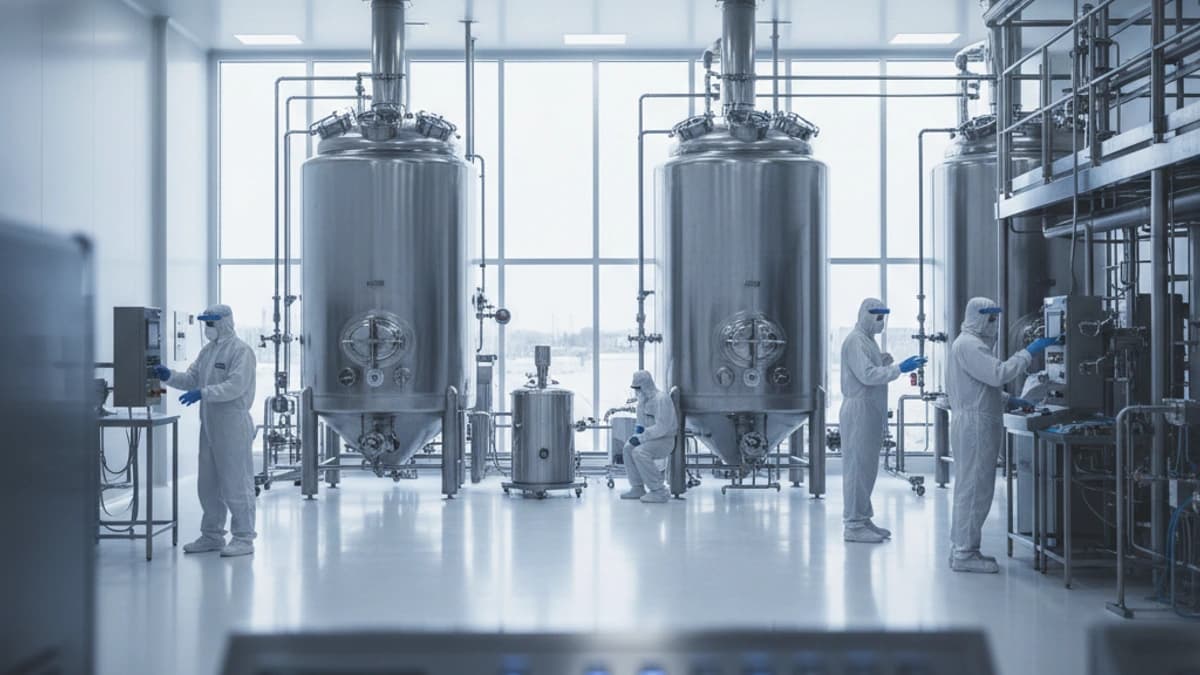
The Biosimilar Gold Rush
The convergence of the largest patent cliff in pharmaceutical history with the maturation of biosimilar development capabilities has created a $150 billion market opportunity. With Humira biosimilars reshaping the autoimmune market, Stelara biosimilars launching in 2025, and the massive I/O biosimilar wave approaching, BD teams have never had more licensing opportunities — or more competitive pressure to act quickly.
Executive Summary
The global biosimilars market reached $39.6 billion in 2025 and is projected to grow to $151.6 billion by 2033 — a CAGR of 18.4%. This growth is fueled by the unprecedented wave of biologic patent expirations — a key driver of biotech M&A trends in 2026 — with over $200 billion in annual branded revenues facing biosimilar competition by 2030.
For BD professionals, the biosimilar market offers a fundamentally different risk-return profile than novel drug development. As our pharma deal tracker shows, development costs are 80-90% lower, timelines are 40-50% shorter, and the target product profile is defined by the reference biologic. The primary competitive advantages are speed-to-market, manufacturing excellence, and commercial reach — making licensing deals — structured using cross-border term sheet frameworks — the primary go-to-market strategy for most participants.
Biosimilar Market at a Glance (2025-2026)
The BD Opportunity Window
Biosimilar Market Overview
The biosimilar market has evolved from a niche corner of generics into one of the fastest-growing segments in the pharmaceutical industry. Monoclonal antibody biosimilars account for the largest share (44.9% of revenue in 2025), with autoimmune disorders representing the largest therapeutic segment (39.9%).
United States: The Largest Prize
North America accounts for 42.8% of the global biosimilars market. The US market has accelerated dramatically since 2023, with the launch of 10+ Humira biosimilars creating a competitive precedent. The IRA's Medicare negotiation provisions are accelerating biosimilar adoption by creating pricing pressure on branded biologics.
Europe: The Mature Market
Europe has led biosimilar adoption for over a decade, with penetration rates exceeding 80% for some reference products. European markets offer faster uptake but lower pricing — making them ideal for licensing partnerships with regional commercial specialists.
Emerging Markets: The Volume Play
China, India, Brazil, and MENA represent massive volume opportunities for biosimilar licensing. Regulatory pathways are streamlining, and local partners provide essential market access. These regions are increasingly attractive for licensing deals focused on affordable biologics.
The $200B Patent Cliff: Every Major Opportunity
The biologics patent cliff is the single largest revenue replacement challenge in pharmaceutical history. Understanding the timeline of patent expirations is essential for biosimilar BD strategy.
Blockbuster Biologics Facing Patent Expiry (2025-2032)
| Drug | Reference Co. | Peak Sales | LOE / Biosimilar Entry | Biosimilar Status |
|---|---|---|---|---|
| Humira (adalimumab) | AbbVie | $21.2B (2022) | 2023 (US) | 10+ biosimilars launched |
| Stelara (ustekinumab) | J&J | $10.9B (2023) | 2025 (US/EU) | 6+ biosimilars approved |
| Keytruda (pembrolizumab) | Merck | $25.3B (2024) | ~2028 | Early development |
| Opdivo (nivolumab) | BMS | $9.0B (2024) | 2028-2030 | Early development |
| Eylea (aflibercept) | Regeneron | $5.7B (2024) | 2026-2027 | Biosimilar approved (Celltrion) |
| Entyvio (vedolizumab) | Takeda | $5.5B (2024) | 2027-2028 | In development |
| Dupixent (dupilumab) | Sanofi/Regeneron | $13.2B (2024) | 2031 | Early pipeline |
| Darzalex (daratumumab) | J&J | $10.0B (2024) | 2030+ | Early pipeline |
The Revenue at Risk
Humira Biosimilar Landscape: Lessons Learned
The Humira biosimilar market is the most informative case study for BD professionals planning biosimilar strategies. With 10+ biosimilars launched since 2023, the market dynamics reveal critical insights about pricing, market share, and commercial strategy.
Humira Biosimilar Market Impact
Key Lessons from Humira for BD Teams
- Interchangeability Matters:Celltrion's YUFLYMA gained FDA interchangeable status in April 2025, giving it a formulary advantage. BD teams should prioritize biosimilar partners with interchangeability data strategies.
- Price Competition is Fierce: With 10+ competitors, Humira biosimilar pricing has dropped 40-80% from branded levels. Later entrants struggle to achieve market share. First-mover advantage is critical.
- High-Concentration Formulations Win: Biosimilars that matched Humira's high-concentration, citrate-free formulation captured greater market share by minimizing switching barriers.
- Payer Contracts Drive Access: The biosimilar that wins the PBM/payer contract wins the patient. Commercial partnerships with strong payer relationships are essential.
Stelara: The Next Battleground
Stelara (ustekinumab) represents the next major biosimilar opportunity. With $10.9 billion in 2023 peak revenues and biosimilar launches beginning in Q1 2025, the Stelara biosimilar market is expected to develop more rapidly than Humira's — with critical implications for BD strategy.
Samsung Bioepis / Sandoz: The Stelara Partnership Model
Samsung Bioepis → Sandoz • Biosimilar (Ustekinumab / Pyzchiva)
Samsung Bioepis needed a Western commercial partner with payer relationships and distribution infrastructure to maximize the Stelara biosimilar launch.
Sandoz licensed Pyzchiva (ustekinumab-ttwe) from Samsung Bioepis in September 2023, launching in the US in February 2025 alongside Amgen's Wezlana as one of the first Stelara biosimilars.
The partnership leverages Samsung Bioepis's development speed and manufacturing quality combined with Sandoz's commercial reach as the world's largest biosimilar company.
The Stelara Pricing Dynamic
I/O Biosimilars: The $35B+ Frontier
The largest biosimilar opportunity in history is approaching: immuno-oncology biosimilars for Keytruda and Opdivo. With combined annual sales exceeding $35 billion, these checkpoint inhibitors represent the ultimate prize for biosimilar developers and their licensing partners.
Keytruda (Pembrolizumab)
- 2024 Revenue: $25.3 billion
- LOE: ~2028 (composition of matter)
- Approved Indications: 30+ cancer types
- Biosimilar Challenge: Complex glycoprotein, extensive clinical program required
- Estimated Biosimilar Market: $10-15B annually by 2032
Opdivo (Nivolumab)
- 2024 Revenue: $9.0 billion
- LOE: 2028-2030
- Approved Indications: 15+ cancer types
- Biosimilar Challenge: Combination therapy standard complicates switching
- Estimated Biosimilar Market: $3-5B annually by 2033
The I/O Biosimilar First-Mover Prize
Key Players & Competitive Landscape
The biosimilar industry is dominated by a small number of highly capable developers, each with distinct strengths and partnership strategies.
Leading Biosimilar Companies: BD-Relevant Comparison
| Company | US Approved | Strength | Licensing Strategy |
|---|---|---|---|
| Samsung Bioepis | 10 | Speed-to-market, manufacturing quality | Partners with Sandoz, Organon, NIPRO |
| Celltrion | 10 | Broad portfolio, interchangeability focus | Self-commercialize + Costco partnership |
| Sandoz | 7 | Commercial reach, payer relationships | In-licenses from Samsung Bioepis and others |
| Amgen | 8 | Biologics manufacturing expertise | Self-develop and commercialize |
| Biocon (+ Viatris) | 5+ | Cost-efficient manufacturing (India) | Partner with Viatris for Western markets |
| Fresenius Kabi | 4+ | Hospital/IV biosimilar focus | Self-commercialize EU, partner for US |
| Alvotech / Teva | 2+ | Interchangeable adalimumab (Simlandi) | Teva commercializes, Alvotech develops |
Biosimilar Licensing Deal Structures
Biosimilar licensing deals differ structurally from novel drug licensing. Understanding these differences is critical for BD teams on both sides of the table.
Biosimilar vs Novel Biologic Development: Strategic Comparison
| Dimension | In-Licensing | Out-Licensing |
|---|---|---|
Development Cost Cost to bring product to market. | $100-250M | $1-3B |
Development Timeline Time from start to approval. | 5-8 years | 10-15 years |
Regulatory Pathway FDA approval pathway. | Abbreviated (351(k)) | Full BLA (351(a)) |
Clinical Trial Size Typical pivotal trial enrollment. | 500-800 patients | 3,000-10,000+ patients |
Pricing Market pricing dynamics. | 15-40% discount to reference | Premium pricing (first-in-class) |
Patent Life Duration of market exclusivity. | Limited (reference product patent) | 12-20 years composition of matter |
Typical Biosimilar Deal Terms
Developer → Commercializer
- Upfront: $10-50M (territory-dependent)
- Milestones: $20-100M (regulatory + commercial)
- Royalties: 15-30% of net sales
- Supply: Developer manufactures, commercializer distributes
- Example: Samsung Bioepis → Sandoz
Co-Development Partnership
- Cost Share: 50/50 development costs
- Profit Share: 50/50 or territory split
- Governance: Joint steering committee
- Risk: Shared development risk
- Example: Biocon → Viatris
Regional Strategy: Where to License
Biosimilar market dynamics vary dramatically by region. BD teams must align their licensing strategy with regional regulatory pathways, pricing environments, and competitive intensity.
United States: High Value, High Competition
The US offers the highest pricing ($5,000-$50,000+ per treatment course) but requires the most investment in clinical trials and patent litigation. Interchangeability status is a significant competitive advantage. PBM/payer relationships are essential for formulary access.
Europe: Mature, Predictable, Volume-Driven
Europe offers faster biosimilar adoption (80%+ penetration for mature products) but lower pricing. Tender-based procurement in many countries means the lowest-price biosimilar wins. Strong manufacturing quality and supply reliability are the primary differentiators.
Japan: Premium Pricing, Complex Regulatory
Japan represents significant value with premium pricing, but requires Japan-specific clinical bridging studies. Samsung Bioepis's NIPRO licensing deal demonstrates the model: partner with a Japanese specialist for regulatory and commercial execution.
Emerging Markets: Volume Opportunity
China, India, Brazil, MENA, and Southeast Asia represent massive unmet need for affordable biologics. Local partner requirements, reference product substitution, and price sensitivity create a different competitive landscape — but the volume opportunity is enormous.
BD Strategy: Where the White Space Is
For BD teams evaluating biosimilar licensing opportunities, the following areas represent the highest-value white space in 2026:
I/O Biosimilars (Keytruda, Opdivo)
CriticalOpportunity: First-mover in a $35B market
Timeline: Development starts now, launch 2031+
Ophthalmology (Eylea)
HighOpportunity: High-value specialty market
Timeline: Biosimilar approved, launches 2026
Autoimmune Next-Wave (Entyvio, Dupixent)
HighOpportunity: $18B+ combined market approaching LOE
Timeline: Development programs in early stages
Japan Regional Licensing
Medium-HighOpportunity: Premium pricing, limited competition
Timeline: Immediate (existing products)
Emerging Market Portfolio Deals
MediumOpportunity: Multi-product bundles for regional partners
Timeline: Immediate
Conclusion: The Biosimilar Decade
The 2025-2035 period will be defined by the largest wave of biologic patent expirations in pharmaceutical history. For BD professionals, this creates unprecedented opportunities — whether you're a developer seeking commercialization partners, a pharma company building a biosimilar portfolio, or a regional player looking to bring affordable biologics to your market.
The key to success in biosimilar licensing is speed, quality, and market access. Companies that move early through in-licensing, develop to the highest analytical and clinical standards, and structure partnerships with commercially strong counterparties will capture the majority of value from this $150 billion market.